
Machrihanish
The Story of Machrihanish
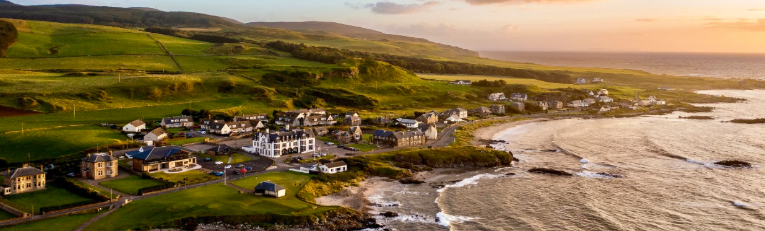
Today Machrihanish looks like a quiet seaside village at the end of the road. It has, however, had several very different lives, and traces of most of them are still visible if you know where to look.
Salt, coal and Industry
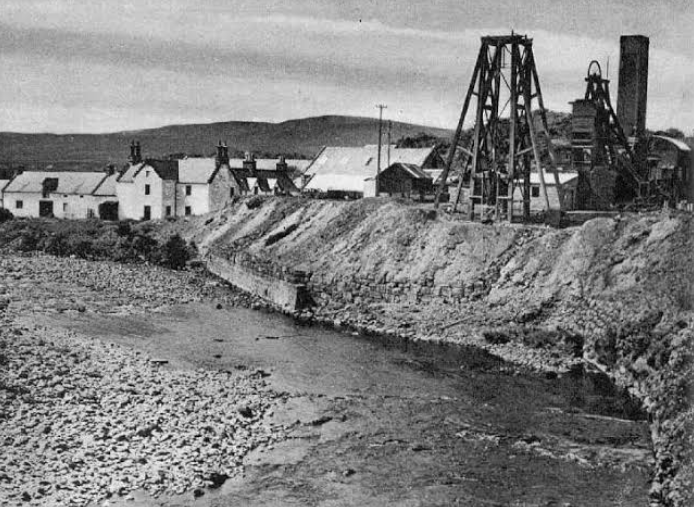
Long before the visitors arrived, this was a working coast. Coal was being dug here before 1500 and burned under pans of seawater along the shore to make salt. The seam appeared to run out in the mid-1800s, but a new pit opened in 1876 and Machrihanish became one of Britain's smallest coalfields. Much of the coal went to fuel the distilleries of nearby Campbeltown, then in their heyday. The pit closed in 1929, and a later drift mine, the Argyll Colliery, produced coal from 1950 until 1967.
The Railway
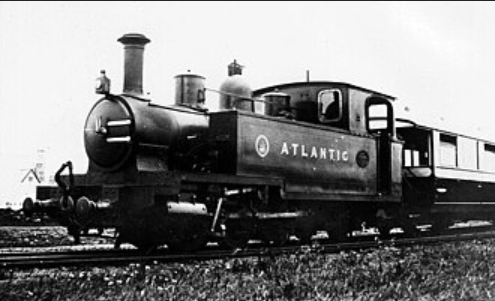
Coal needed a way to reach Campbeltown. A canal was cut in the late 1700s, and in the early 1900s a narrow-gauge railway took over. In 1906 it began carrying passengers as well as coal. Steamers brought day-trippers from Glasgow to Campbeltown in time to catch the train to Machrihanish's beach and golf links, and to be back on board by evening. The line closed in 1932, but you can still trace the route across the landscape.
The airbase
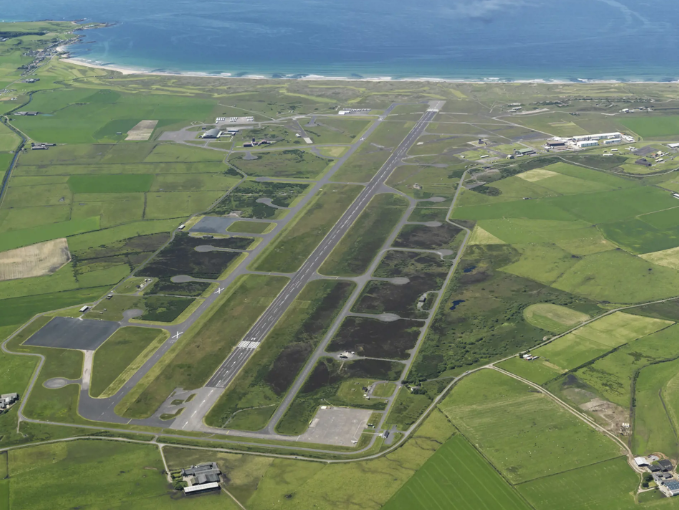
The wide flat ground here also suited aircraft. A naval air station opened in 1916, and a new airfield followed in 1941 as HMS Landrail, a Fleet Air Arm base. In the early 1960s it was rebuilt for the Cold War, with a 3,049-metre runway, the longest in Scotland. Bombers, NATO aircraft and US forces all used it, and the US Navy operated a weapons facility on the site from 1968 until it handed the base back in 1995. In 2012 the community bought the old airbase, and part of the runway now serves as Campbeltown Airport.
Exploring more of Argyll? Our sister park sits beside the Crinan Canal in Lochgilphead, another landscape shaped by history.